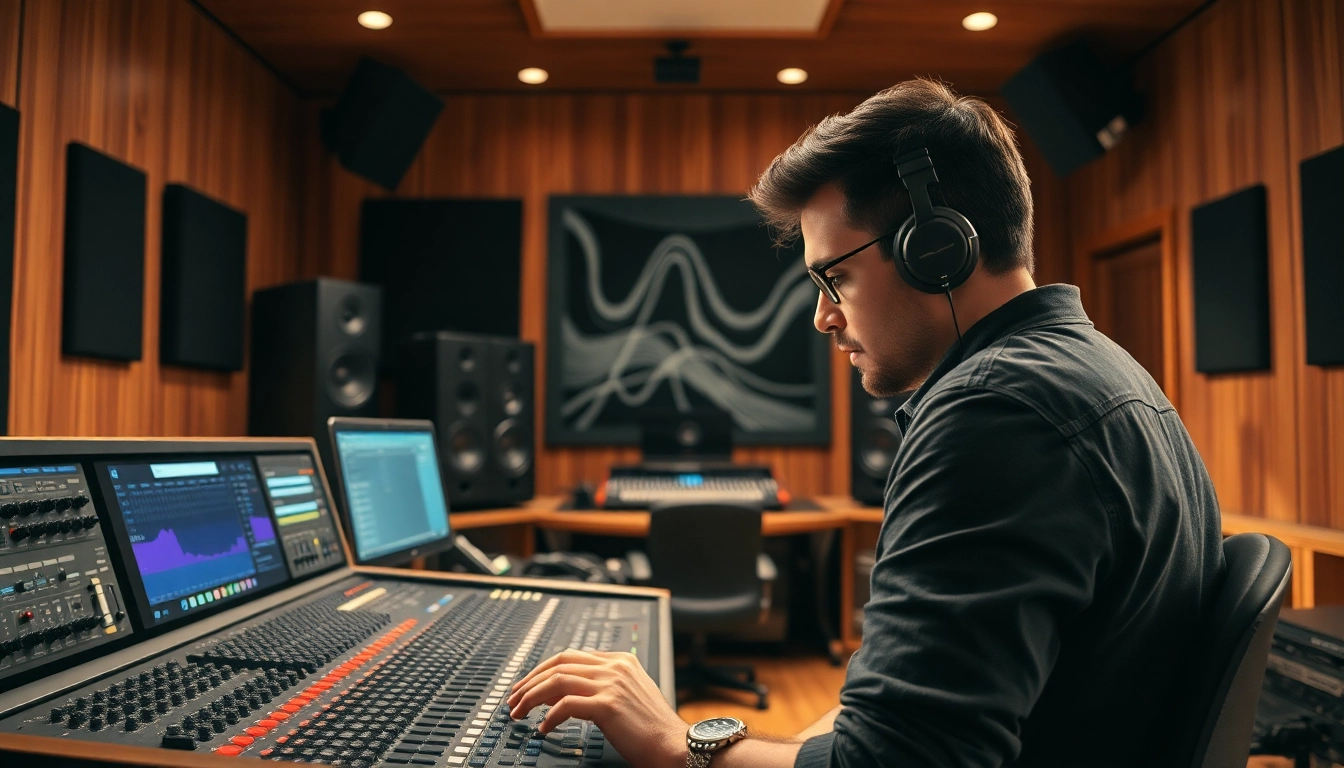
Enhance your tracks with expert online audio mastering in a professional studio.

Mastering Tracks Perfectly: A Guide to Online Audio Mastering

Understanding Online Audio Mastering

What is Online Audio Mastering?

Online audio mastering refers to the digital process of finalizing a music track for distribution through internet-based services. This technique encompasses various technical enhancements, ensuring the audio quality meets industry standards while addressing compatibility across different platforms. Unlike traditional mastering, online audio mastering allows artists to send their tracks via the internet, eliminating geographical constraints and providing access to professional grading and optimization tools. The process is not just about loudness; it’s about bringing out the best elements of your music, refining it to create a polished product ready for listeners.

Why Choose Online Audio Mastering?

With the rapid advancements in technology, many creators are opting for online audio mastering for several reasons. First, the convenience it offers is unmatched; you can upload your tracks at any time, and receive them back, often within a short turnaround time. Moreover, online audio mastering services typically provide cost efficiency compared to conventional studios, making high-quality mastering accessible for independent artists and musicians alike. Additionally, many online services utilize expert engineers who possess an ear trained on current trends in audio quality, ensuring your music is competitive. Through online audio mastering, you can enhance the potential of your tracks without the usual overhead of studio costs, creating a win-win scenario for creators.

Key Differences Between Mixing and Mastering

Often confused, mixing and mastering serve distinct purposes in music production. Mixing involves the integration of individual audio tracks, balancing levels, applying effects, and enhancing the overall sound to create a cohesive piece. It is typically an artistic process, allowing for creativity and expression. Conversely, mastering is a technical and final stage where a mixed track is refined to form a polished stereo output. This stage focuses on ensuring uniform sound quality across all playback systems while improving song dynamics, loudness, and clarity. Understanding this distinction is critical for musicians to effectively utilize their resources and focus on each stage of producing a track properly.

Benefits of Online Audio Mastering

Enhancing Sound Quality

One of the primary benefits of online audio mastering is the enhancement of sound quality. Professional mastering engineers bring years of experience and a well-trained ear to improve your music significantly. They utilize sophisticated audio processors, EQ settings, and compression techniques to facilitate superior sound clarity and balance. This level of refinement can mean the difference between a track that sounds amateurish and one that resonates with audiences across digital platforms. As a musician, reliable mastering can elevate your tracks, making them competitive and market-ready.

Cost-Effectiveness Compared to Studio Mastering

When comparing online audio mastering to traditional studio mastering, the cost-saving benefits are striking. Traditional studios often involve hourly rates, travel expenses, and additional costs for amenities. In contrast, many online services offer tiered pricing structures—the ability to choose packages provides flexibility in managing your budget. This financial accessibility allows emerging artists to invest in mastering without prohibitive costs, enabling a higher quality of music production without financial strain.

Convenience of Remote Services

The convenience of online audio mastering cannot be overstated. Musicians can easily upload their work from the comfort of their homes and receive feedback and revisions through email or project management platforms. This flexibility facilitates collaboration, even with engineers located globally. The ability to manage your projects remotely not only saves time but fosters a smoother workflow, making it easier to balance creativity with logistical demands. For busy artists, this means less disruption and more focus on producing great music.

Choosing the Right Online Audio Mastering Service

Evaluating Quality and Expertise

When selecting an online audio mastering service, evaluating quality and expertise is paramount. Look for services that showcase their engineers’ credentials and experience, as skilled professionals will have the necessary knowledge and tools to bring your music to life. Checking for before-and-after samples, obtaining client testimonials, and exploring the service’s portfolio can provide insights into their capabilities. Furthermore, consider reaching out with specific inquiries or to gauge their responsiveness—often, the manner in which a service communicates can reflect their level of professionalism.

Understanding Pricing Models

Online audio mastering services vary widely in their pricing models. It’s essential to understand what you get for your investment. Some services charge per track, while others may offer bulk discounts for multiple tracks or subscription models allowing unlimited mastering. Additionally, be mindful of any additional fees, such as for revisions or extra formats. Establishing a clear understanding of pricing upfront will aid in making informed decisions that align with your budgetary constraints.

Reading Customer Reviews and Testimonials

Customer reviews and testimonials serve as important indicators of a service’s reliability and effectiveness. Websites and social media platforms often contain user feedback that can reveal strengths and weaknesses about the mastering service. High ratings might demonstrate consistent quality, but it’s beneficial to pay attention to any specific areas mentioned in lukewarm feedback; such insights can help you anticipate potential challenges and ensure the service meets your expectations.

Best Practices for Preparing Your Track for Mastering

Mix Considerations Before Mastering

Before sending your track for mastering, ensure your mix is as clean as possible. Avoid clipping or maximum volume levels, leaving headroom for the mastering process. It’s generally advisable to keep the mix level around -6 dB. Listen critically for frequency imbalances and make necessary adjustments so that the engineer can focus on refining rather than fixing foundational issues. Having a balanced mix before the mastering stage can greatly enhance the outcome.

File Formats and Specifications

Understanding the proper file formats and specifications is crucial for mastering success. Most engineers prefer high-resolution audio files, typically in WAV or AIFF format, and a minimum sample rate of 24-bit/48kHz. Make sure to export your tracks without excessive processing or alterations that might affect the mastering process. Providing a clean, well-defined source allows your mastering engineer to work with the best possible audio quality, leading to superior results.

Communicating with Your Mastering Engineer

Effective communication with your mastering engineer can greatly impact the final product. Be explicit about your artistic vision, preferences regarding loudness, and any reference tracks that inspire you. This dialogue helps the engineer understand your expectations, allowing them to tailor the mastering process to meet your specific needs. Clear communication can lead to more successful revisions and ensure that your creative goals are achieved.

Measuring the Success of Your Mastered Tracks

Listening Tests and Feedback

Once your track has been mastered, conducting listening tests is essential. Gather a small audience to provide feedback, ideally comprising individuals with a keen ear for music. Assessing the response from these listeners can yield invaluable insights. Take note of their feedback regarding clarity, dynamics, and emotional resonance. This qualitative data allows for informed modifications or validation of your music before broad public release.

Comparative Analysis Against Industry Standards

To gauge the success of your mastered music, conduct a comparative analysis with industry benchmarks. Listen to tracks from artists in your genre and note how your mastered version stacks up in terms of loudness, clarity, and overall sonic impact. This method can help identify areas of improvement and provide a clearer understanding of how your track fits in the competitive landscape.

Adjusting Based on Audience Response

Once your music reaches the audience, their reactions can provide essential data for future projects. Monitor streaming metrics, social media engagement, and listener comments to better understand their preferences. These insights may guide decisions about artistic direction, promotional strategies, and alterations in your mastering process in subsequent releases. Being adaptable and responsive to audience feedback is key to developing a successful musical career.

Frequently Asked Questions

What is the typical turnaround time for online audio mastering?

Turnaround times can vary but typically range from 24 hours to a week, depending on the service and the complexity of your project.

Can I request revisions during the mastering process?

Most online mastering services offer revision options, allowing you to request changes based on your feedback after reviewing the initial master.

Do I need to provide specific instructions for mastering?

While you don’t need to provide specifics, sharing preferences regarding loudness, style references, and any particular elements you want to emphasize can help achieve the desired outcome.

How does online mastering differ from traditional studio mastering?

Online mastering is conducted remotely, is often more cost-effective, and allows artists to communicate with engineers without geographical limitations, making it more accessible than traditional studio options.

What file format should I use for mastering?

It’s generally recommended to use high-resolution WAV or AIFF files, with a minimum sample rate of 24-bit/48kHz for optimal mastering quality.